2200 AW Grimes Blvd, Suite 100 Round Rock, TX 78665

Most people pick a toothpaste the same way they pick a shampoo: grab what looks familiar, check the flavor, and move on. It's easy to assume that all toothpastes are basically the same — that the brand doesn't matter as long as you're brushing twice a day. That assumption requires revisiting.
The ingredient list on a tube of toothpaste tells a more interesting story than the packaging suggests. Some ingredients protect your enamel and reduce your risk of cavities. Others have been quietly phased out by regulators. And a few (though not dangerous for most people) cause real problems for some. Knowing the difference gives you better tools to make a smarter choice for your oral health needs.
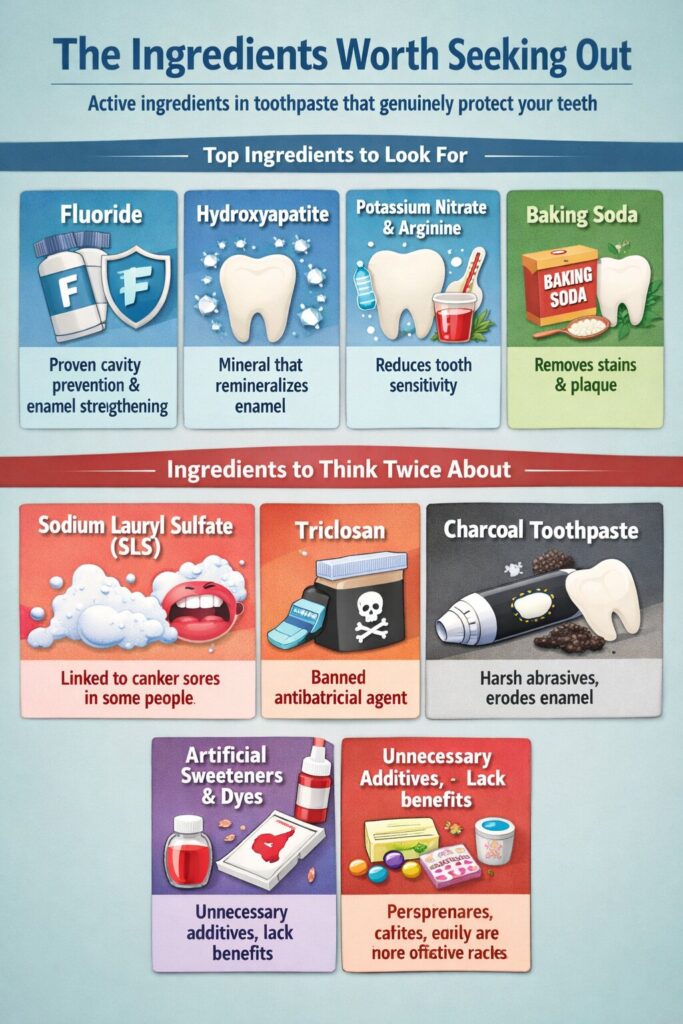
The Ingredients Worth Seeking Out
The active ingredients in a toothpaste separate genuinely protective formulas from those that mostly just freshen your breath.
Fluoride
Fluoride has more than 70 years of clinical research behind it, and it remains the most well-documented cavity-prevention ingredient available in over-the-counter toothpaste. The American Dental Association (ADA) states that fluoride strengthens tooth enamel and can remineralize teeth in the early stages of decay — before a cavity fully forms. Regular use of fluoride toothpaste can reduce the risk of cavities by up to 25%, according to the ADA.
The most common forms you'll see on ingredient labels are sodium fluoride and stannous fluoride. Stannous fluoride does double duty — it addresses both cavity prevention and dentinal sensitivity, and research supports its anti-inflammatory effect on gum tissue. If you're dealing with sensitive teeth alongside cavity concerns, a stannous fluoride formula is worth considering.
One important caveat: fluoride is only a concern when swallowed in excess, particularly in young children. The ADA recommends a pea-sized amount for children ages two through six, with adult supervision to ensure they spit it out. For adults brushing normally, fluoride at standard toothpaste concentrations is considered safe.
A dentist in Round Rock can help you determine the right fluoride concentration based on your cavity risk, especially if you've had multiple fillings or deal with dry mouth.
Hydroxyapatite
If you've seen "nano-hydroxyapatite" on a toothpaste label and wondered what it means, here's the short version: it's a synthetic form of the same calcium phosphate mineral that makes up about 97% of your tooth enamel. Rather than strengthening enamel from the outside the way fluoride does, hydroxyapatite integrates directly into weakened enamel structure. Clinical studies show it can effectively remineralize early decay, making it a compelling option for people who prefer a fluoride-free formula.
Potassium Nitrate and Arginine for Sensitivity
If cold drinks or breathing in through your mouth makes your teeth ache, look for potassium nitrate or arginine on the label. A 2023 systematic review and network meta-analysis published in the Journal of Dentistry confirmed that twice-daily use of potassium nitrate or arginine-based toothpaste can meaningfully reduce dentinal hypersensitivity pain. These aren't quick fixes — they work cumulatively over several weeks of regular use.
Baking Soda (Sodium Bicarbonate)
Baking soda is a mild abrasive that removes surface stains without damaging enamel. Research published in the Journal of the American Dental Association found that baking soda toothpastes show promise for reducing dental plaque and may decrease gum bleeding associated with early-stage gingivitis compared with toothpastes without it.
Xylitol
Xylitol is a natural sugar alcohol that doesn't feed the cavity-causing bacteria (Streptococcus mutans) that ordinary sugar does. In fact, xylitol actively reduces the population of these bacteria in your mouth. It's a useful complement to fluoride, not a replacement — think of it as reducing the bacterial load that fluoride then has less work to fight.
Ingredients to Think Twice About
Not every ingredient in toothpaste earns its spot on the label. A few have been removed by regulators; others are harmless for most people but problematic for some.
Sodium Lauryl Sulfate (SLS)
Sodium lauryl sulfate is what makes toothpaste foam. That foam has no meaningful cleaning function — it just creates the sensation of activity. For most people, SLS is benign. But for roughly 10% of the population, it's a consistent trigger for canker sores and irritation of the mouth tissues. Switching to SLS-free formulations often provides relief within two to four weeks for those who are sensitive to it. If you get recurring mouth ulcers and haven't changed anything else in your routine, SLS is the first variable worth eliminating. Look for "SLS-free" or "non-foaming" on the packaging.
Triclosan
Triclosan was once a common antibacterial additive in toothpaste. The FDA effectively removed it from US toothpaste formulations in 2019 due to insufficient evidence of safety and growing concerns about endocrine disruption and antibiotic resistance. Triclosan is no longer found in current US toothpaste formulations, but if you have old tubes in a cabinet somewhere, it's worth replacing them.
High-Abrasive Charcoal Toothpaste
Activated charcoal toothpastes have long been a trending product, but the clinical reality is less flattering. The ADA has not granted its Seal of Acceptance to any charcoal toothpaste, largely because most charcoal formulas lack fluoride, and some have a Relative Dentin Abrasivity (RDA) score high enough to erode enamel with repeated use. Surface stains may lift temporarily, but enamel loss is permanent. If whitening is your goal, there are safer and more effective routes.
Artificial Sweeteners and Colorants
Some toothpastes contain saccharin or artificial colorants such as Blue 1 and Red 40. These ingredients aren't clinically dangerous for most adults at the levels found in toothpaste, but they serve no oral health purpose. If you prefer a clean ingredient list, particularly for children's toothpaste, choosing a formula without them is reasonable.
Reading the Label: One Simple Rule
The ADA Seal of Acceptance on a toothpaste label means the product has been independently evaluated for safety and efficacy. It must contain fluoride, must not include ingredients that contribute to tooth decay, and must deliver on whatever claims appear on the package. It's not a perfect system, but it's the most reliable shortcut available when you're standing in a drugstore aisle comparing options.
If you have children in the household, Austin Water and the Round Rock Municipal Utility District provide fluoridated water that meets federal recommendations. Even so, the CDC recommends continuing to use fluoride toothpaste alongside fluoridated water for optimal protection.
A Round Rock dentist can assess your cavity risk by checking your diet, saliva quality, and dental history and recommend toothpaste ingredients that match your needs rather than defaulting to whatever's most widely marketed.
Your toothpaste choice is a small decision with a real cumulative effect. If you're due for a checkup or have questions about what your current formula, or lack thereof, is doing for your teeth, book an appointment at Chandler Creek Dental Care today. Same-day and new-patient appointments are available.
People Also Ask
Is fluoride-free toothpaste safe to use long-term?
Fluoride-free toothpaste won't cause harm, but it also won't provide the same cavity-prevention benefit that fluoride does. If you choose a fluoride-free formula — for personal preference or because you're using hydroxyapatite as an alternative — you're accepting a trade-off on proven enamel protection. Whether that trade-off is worth it depends on your individual cavity risk, which a dentist can help you assess.
Does whitening toothpaste actually whiten teeth?
Most whitening toothpastes work through mild abrasives or polyphosphate compounds that reduce surface staining. They can remove extrinsic stains — the kind caused by coffee, tea, or wine but they don't change the intrinsic color of the tooth beneath the enamel. For deeper whitening, professional in-office or take-home tray systems are significantly more effective. Using high-abrasive whitening toothpastes over the long term can actually make teeth appear more yellow, as enamel thins and the darker dentin beneath becomes more visible.
How much toothpaste should adults actually use?
A pea-sized amount — roughly the size of a chickpea — is sufficient for adults. More toothpaste doesn't clean more effectively; it just produces more foam and rinse. Using excess toothpaste increases the amount of fluoride in contact with your mouth beyond what's needed and wastes product.
Can toothpaste treat gum disease?
Toothpaste with stannous fluoride or certain antimicrobial agents can help manage early gum inflammation (gingivitis) when combined with regular brushing and flossing. But ongoing gum disease (periodontitis involving bone loss and deep pockets) requires professional treatment. No toothpaste reverses active periodontal disease on its own.
Is children's toothpaste just a weaker version of adult toothpaste?
Not exactly. Children's toothpaste typically contains the same active ingredients but at slightly lower fluoride concentrations for very young children, along with flavors designed to encourage consistent brushing. The ADA recommends using fluoride toothpaste starting at the first tooth — a tiny smear for children under age three, and a pea-sized amount from ages three to six. By age six, children can generally transition to adult-strength fluoride toothpaste.